When an Insurance Company Questions Your Car Repair Estimate
Introduction
After a road accident, most vehicle owners want one thing: to have their car repaired properly and returned to normal as quickly as possible. However, the process does not always move directly from damage inspection to workshop repairs. Insurance companies may review the proposed costs, request additional information, or question certain items included in a repair estimate.
For drivers, this can create uncertainty. They may wonder whether the workshop has calculated the costs correctly, whether the insurer is entitled to reduce certain items, and what they should do before agreeing to a settlement.
The key is to understand how repair estimates work and why detailed documentation matters. A transparent assessment gives everyone involved a clearer picture of the damage, the necessary repair operations, and the expected costs.
Whether the accident was caused by another driver or involved a claim under your own comprehensive insurance, taking a structured approach can help prevent misunderstandings.
Why Insurance Companies Review Repair Estimates
An insurance company generally needs to understand the damage and the financial implications before deciding how a claim should be handled.
A repair estimate provides the information required for this review. It describes the damaged components, the proposed repair work, and the expected costs.
The insurer may examine several aspects, including:
- Whether the reported damage is consistent with the accident.
- Which components need repairing or replacing.
- Whether the proposed labour operations are necessary.
- Whether painting and refinishing costs are reasonable.
- Which replacement parts are included.
- Whether additional technical inspections are required.
- Whether the estimate follows the applicable insurance and contractual conditions.
A review does not automatically mean that the estimate is wrong.
In many cases, the insurer simply needs more information before proceeding. However, if particular repair items are removed or reduced, the vehicle owner should understand the reasons before accepting the proposed arrangement.
The Importance of a Detailed Written Estimate
A brief price indication is rarely enough to explain a complex accident repair.
For example, an estimate that only states that the front bumper needs replacing does not explain whether its mounting points, surrounding panels, or connected components have also been affected.
A detailed estimate provides a clearer breakdown.
Vehicle Details
The document should identify the vehicle being assessed, including relevant model and registration information.
Mileage, equipment, and other vehicle characteristics may also be relevant to the assessment.
Damage Description
The damaged areas should be identified clearly.
Photographs can support the written description by showing the affected panels and the extent of visible damage.
Repair and Replacement Operations
The estimate should explain which components can be repaired and which need replacement.
This distinction matters because repairing a component is not always technically appropriate or economically sensible.
Labour Costs
Bodywork and painting involve different operations.
Removing components, preparing surfaces, correcting panel alignment, fitting replacement parts, and completing refinishing work may all require separate labour calculations.
Paintwork and Materials
The estimate may include surface preparation, paint materials, refinishing, and blending into adjacent areas where necessary.
A clear explanation helps the insurer understand why the proposed paintwork is required.
Additional Technical Work
Modern vehicles may require additional checks after a collision.
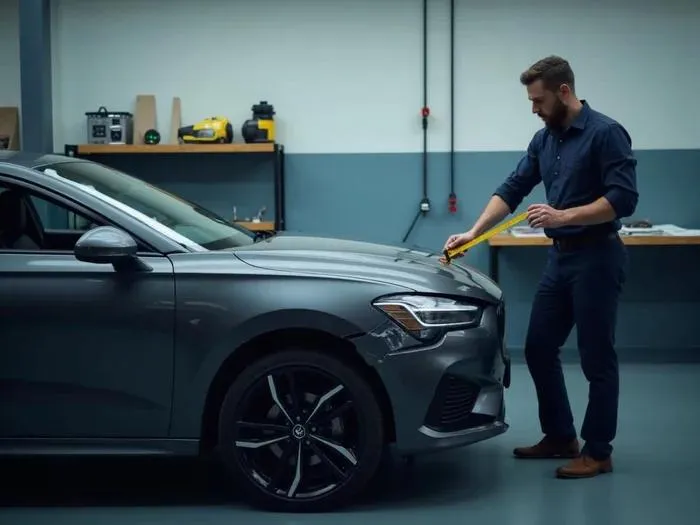
Depending on the impact and affected systems, this can include structural measurements or calibration of driver-assistance systems.
Including relevant operations helps prevent important work from being overlooked.
Common Reasons an Insurer May Question an Estimate
Different insurers and policies have different procedures, but certain questions arise regularly during accident claims.
Understanding these issues can help vehicle owners respond more confidently.
1. Disagreement About Repair or Replacement
An insurer may question whether a damaged component needs replacing or whether it can be repaired.
For example, a damaged bumper cover may appear suitable for repair, but its mounting points or internal supports could also be affected.
The workshop should explain the technical reason for its recommendation.
The decision should be based on the component’s actual condition, repair requirements, and relevant manufacturer guidance rather than appearance alone.
2. Differences in Labour Calculations
An insurer may question the time allocated to a particular repair operation.
Bodywork can involve several stages, and some operations require additional preparation or dismantling.
If labour time is challenged, the workshop can provide a more detailed explanation of the work involved.
3. Replacement Parts and Pricing
Another common point of discussion concerns replacement parts.
Depending on the vehicle, the estimate may include original manufacturer parts or suitable alternatives.
The applicable insurance arrangements and repair requirements should be considered before deciding which parts are appropriate.
Vehicle owners should ask the workshop to explain the proposed parts and clarify any differences raised by the insurer.
4. Paintwork and Blending
A collision may require more than repainting the visibly damaged section.
To achieve a consistent finish, technicians may need to blend the new paint into adjacent areas.
An insurer may request clarification about why this work is necessary.
Photographs, paint information, and a clear explanation of the refinishing process can help support the proposed operation.
5. Hidden Damage Discovered During Repairs
Sometimes, additional damage becomes visible only after certain components have been removed.
For example, an impact behind a bumper may have affected supports or other parts that were not visible during the first inspection.
The workshop should document the newly discovered damage and provide the relevant additional information to the insurer before proceeding with work that requires approval.
This process helps ensure that the final repair calculation reflects the actual condition of the vehicle.
What Should You Do If Your Estimate Is Reduced?
Receiving a revised estimate can be frustrating, particularly when you expected the insurer to cover the proposed repair costs.
However, it is better to review the changes carefully than to make an immediate decision.
A practical approach involves several steps.
First, request the revised calculation.
Ask the insurer for a written explanation of which repair positions have been changed or removed.
Second, compare the documents.
Review the original workshop estimate alongside the insurer’s revised calculation. Identify differences in parts, labour, painting, and additional technical operations.
Third, ask the workshop for clarification.
The repair specialist can explain why particular operations are required and whether the proposed repair method is appropriate.
Fourth, obtain supporting documentation.
Where necessary, additional photographs, technical explanations, or an independent appraisal may help clarify the damage.
Finally, seek appropriate advice if a disagreement remains.
The correct next step depends on the insurance policy, the accident circumstances, and the applicable legal position.
Vehicle owners should avoid authorizing work based on assumptions about who will pay any disputed amount.
Why an Independent Appraisal Can Help
A repair estimate and an independent accident appraisal serve different purposes.
A repair estimate primarily calculates the work and costs required to restore the vehicle.
An independent appraisal can provide a broader assessment of the accident damage and its financial consequences.
Depending on the circumstances, the appraisal may include:
- Detailed documentation of the damage.
- Photographic evidence.
- Repair-cost calculations.
- Assessment of the vehicle’s pre-accident condition.
- Pre-accident market value.
- Potential diminished value.
- Relevant technical observations.
This broader documentation can be particularly useful when an accident involves substantial damage or when there is disagreement about the extent of the loss.
For an accident caused by another driver, an independent expert may provide an assessment that is separate from the opposing insurer’s own review.
In Germany, people affected by a non-fault accident generally have the right to choose an independent vehicle expert, although the recoverability of the associated costs can depend on the circumstances and the scale of the damage.
For claims under comprehensive insurance, the policy conditions may determine how assessments are arranged.
The decision to obtain an appraisal should therefore be based on the actual situation rather than a fixed assumption that every claim requires one.
Why Accident Photographs Are So Important
Photographs can help explain why a particular repair operation appears in an estimate.
They also provide a record of the vehicle’s condition at the time of inspection.
A useful photographic record should include both overall and detailed views.
For example, if the rear bumper is damaged, the documentation should show the entire rear of the vehicle as well as close-up images of the impact area.
It may also be useful to photograph nearby panels, lights, and other components that could have been affected.
When possible, document:
- The vehicle from the front, rear, and both sides.
- Each damaged body panel.
- Close-up views of cracks, dents, and scratches.
- Visible gaps or displaced components.
- Broken lights, glass, or exterior fittings.
- Relevant details of the accident scene, where safe.
If additional damage is discovered during dismantling, the workshop should photograph and record it as part of the supplementary assessment.
Clear evidence can make communication between the workshop, vehicle owner, and insurer more straightforward.
Why the Repair Should Not Be Started Without Understanding the Approval Process
Vehicle owners may be tempted to authorize repairs immediately because they want their car back.
However, it is important to understand the relevant insurance process first.
Depending on the type of claim, the insurer may need to review the estimate, approve particular operations, or arrange its own inspection.
If repairs begin before the necessary clarification, disagreements about costs may become more complicated.
This does not mean that a damaged vehicle must always remain untouched. Safety-related work and urgent arrangements may be necessary.
The important point is to coordinate the repair process with the insurer and workshop so that the damage is documented appropriately and the required steps are followed.
If the vehicle is unsafe to drive, it should not be driven simply to avoid the inconvenience of arranging transport.
The Value of a Workshop That Can Coordinate the Process
Managing an accident claim can involve several parties.
The vehicle owner may need to communicate with the insurer, workshop, independent expert, and possibly a legal adviser.
Having a repair workshop that can explain the technical side of the process can make these discussions easier.
A knowledgeable team can identify the damage, prepare the repair calculation, provide photographs, and explain why specific operations are included.
It can also help coordinate an independent appraisal when a wider assessment is appropriate.
This does not guarantee that every insurance disagreement will be resolved immediately, but it provides a more organized basis for dealing with questions.
How LR Lackdesign Helps With Estimates and Insurance Coordination
Motorists in Grevenbroich and surrounding areas can contact LrLackdesign for accident damage inspections, repair estimates, and assistance with the insurance process.
The owner-operated bodywork and paint workshop, led by Leonardo Rios Dieker, has been serving customers since 2022.
Its team provides a free initial inspection and a written repair estimate. The damage is documented with photographs, and the estimate explains relevant work operations, replacement parts, and painting requirements.
When an insurer requests clarification, the documented repair positions provide a basis for discussing the proposed work.
For more substantial accidents or situations requiring a broader assessment, LR Lackdesign works with its independent appraisal partner, Hello Gutachten. The team can coordinate the appointment and help vehicle owners understand whether a repair estimate or independent appraisal is the more suitable option.
Customers seeking a Kostenvoranschlag und Gutachten nach einem Unfall can send photographs through WhatsApp for an initial assessment. This helps the workshop understand the visible damage and advise on the next steps. A written estimate requires an inspection of the vehicle at the workshop.
LR Lackdesign also offers accident repairs, bodywork, painting, and assistance with insurance coordination. Direct billing can be arranged where appropriate.
For customers who cannot easily bring their vehicle to the workshop, collection and delivery can be organized. Rental-car assistance may also be available.
The workshop serves Grevenbroich, Jüchen, Rommerskirchen, Bedburg, Neuss, Korschenbroich, and Mönchengladbach.
Questions to Ask Before Accepting a Revised Estimate
If an insurer proposes a different repair calculation, asking focused questions can help clarify the situation.
Consider asking:
- Which individual repair items have been reduced?
- Why has a particular component been classified as repairable?
- Are all necessary labour operations included?
- Has the paintwork calculation been reviewed?
- Is additional documentation required?
- Has hidden damage been considered?
- Would an independent appraisal provide useful additional evidence?
- Are there policy conditions that affect the proposed repair process?
Keeping the questions specific makes it easier for the insurer and workshop to provide useful answers.
It is also advisable to keep copies of written communications and revised documents.
Conclusion
An insurance review is a normal part of many accident claims, but questions about repair costs can create uncertainty for vehicle owners.
A detailed estimate helps explain the proposed work, while photographs and technical documentation support the individual repair positions. If the damage is substantial or a wider assessment is needed, an independent appraisal may provide additional information about the vehicle and its financial position.
The most important step is to understand why a proposed repair item has been questioned before accepting a revised calculation or authorizing work.
For motorists in Grevenbroich and nearby communities, LR Lackdesign offers initial damage inspections, written cost estimates, and coordination of independent appraisals through Hello Gutachten.
Also read: Why Two Similar Car Accidents Can Have Completely Different Repair Costs
With clear documentation and professional communication, vehicle owners can approach insurance discussions with a better understanding of the damage, the necessary repairs, and the decisions that need to be made.