Mhm Meaning in Text Tone, Uses, and Examples
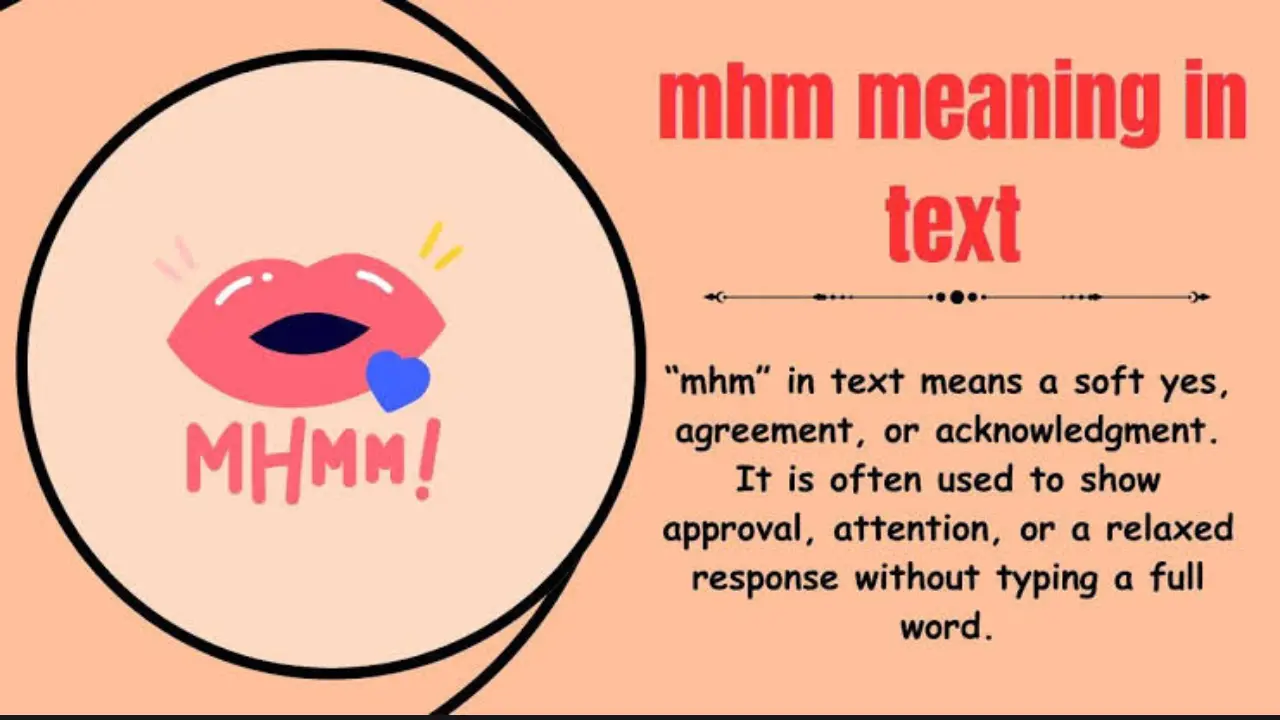
The mhm meaning in text is usually “yes,” “I agree,” or “I’m listening.” It is a written version of the affirmative sound “mm-hmm,” often used as a quick, casual reply. Its exact feeling depends on the conversation: “mhm” can sound warm and engaged, neutral and brief, or slightly reluctant when it appears without other context.
Unlike a clear “yes,” this small response carries tone through timing, punctuation, repetition, and the messages around it. Reading those clues helps prevent a short reply from being misunderstood.
What does “mhm” mean in a text?
“Mhm” generally means yes. It can confirm that someone understands, agrees, or is paying attention. In speech, it represents a closed-mouth affirmative sound rather than a formal word.
For example:
- “Did you send the email?” “Mhm.”
- “You’re still coming tonight, right?” “Mhm!”
- “That meeting was much longer than expected.” “Mhm, definitely.”
In each case, the person is expressing agreement or confirmation. The response is most common in informal chats with friends, family, classmates, coworkers who know each other well, or a romantic partner.
Mhm meaning in text: tone makes the difference
The letters stay the same, but “mhm” can communicate different attitudes. A text message does not include facial expressions or vocal tone, so surrounding details matter.
| Form or context | Likely meaning | Example |
|---|---|---|
| “mhm” | A simple, low-key yes or acknowledgment | “Are you free after work?” “mhm” |
| “Mhm!” | Enthusiastic agreement | “Want pizza?” “Mhm!” |
| “mhmm” or “mhmmm” | Often stronger agreement, interest, or playful emphasis | “That dessert looks good.” “Mhmmm.” |
| “mhm…” | Possible hesitation, uncertainty, or an unfinished thought | “So you liked the plan?” “mhm…” |
| “mhm.” | Can be neutral, curt, or reluctant depending on the exchange | “You forgot again.” “mhm.” |
None of these meanings is guaranteed. One person may type “mhm.” simply because that is their normal punctuation style. It is safer to judge the full conversation than to assign a negative meaning to one short message.
Common ways people use “mhm”
“Mhm” does more than answer a direct yes-or-no question. It can serve several conversational purposes.
To say yes
This is the most direct use. It confirms a question without adding detail.
Example: “Did the package arrive?” “Mhm, this morning.”
To show active listening
During a longer exchange, “mhm” can mean “I hear you; keep going.” It is similar to nodding while someone speaks. In texting, it may appear between several messages from the other person.
Example: “I talked to my teacher, and then she explained the assignment.” “Mhm.” “She said it is due Friday.”
To show agreement with a statement
Someone may use “mhm” in place of “exactly,” “that’s true,” or “I agree.”
Example: “We should leave early to avoid traffic.” “Mhm, that makes sense.”
To respond briefly when busy or tired
A one-word answer can simply reflect limited time or energy. It does not automatically mean the sender is upset or uninterested.
Example: “I’ll tell you the rest later.” “mhm, okay.”
To signal mild reluctance
When the topic is unpleasant, “mhm” may be a reluctant acknowledgment rather than eager agreement. This meaning usually becomes clear from the words before it.
Example: “You need to call the landlord tomorrow.” “Mhm.”
“Mhm” vs. “mm-hmm,” “hmm,” and “uh-huh”
These expressions look and sound similar, but they do not always mean the same thing. “Mhm” and “mm-hmm” are generally affirmative. “Hmm” often signals thinking, doubt, or uncertainty instead.
| Expression | Usual meaning in messages |
|---|---|
| mhm | Yes; agreement; acknowledgment |
| mm-hmm | Yes; the more explicit written spelling of the affirmative sound |
| uh-huh | Yes or acknowledgment; can also be used while listening |
| yeah / yep / yup | Casual forms of “yes,” often clearer as a direct answer |
| hmm | Thinking, uncertainty, skepticism, or considering something |
| uh-uh | Usually no, especially as the written form of a negative head shake |
The hyphenated form “mm-hmm” is often used when a writer wants to show the sound more clearly. “Mhm” is a compact texting spelling. Both commonly mean yes.
Be careful with “hmm.” A reply of “hmm” does not usually mean agreement. It often means the person is processing information, has doubts, or needs more time to respond.
How punctuation and spelling change the feeling
Small writing choices can add emotional cues to a short reply. They are informal conventions, not fixed grammar rules.
- Capital letters: “MHM” may look emphatic, excited, teasing, or annoyed, depending on the conversation.
- Exclamation marks: “Mhm!” often feels more upbeat than “mhm.”
- Extra letters: “mhmmm” can suggest stronger interest, enjoyment, or drawn-out agreement.
- Ellipses: “mhm…” may imply hesitation, discomfort, or that the sender has more to say.
- Added words: “mhm, sure” can be sincere, but in some contexts it may sound doubtful or sarcastic.
Emoji and punctuation can help clarify intent. “Mhm  ” often reads friendlier than a bare “mhm,” while “mhm…” invites a closer look at the discussion. Still, texting habits vary widely. Some people use lowercase, periods, or brief answers in every message.
Hibbett Sports Guide Shoes, Apparel, Sneaker Releases & More
How to tell whether “mhm” is positive, neutral, or annoyed
Look for patterns and context rather than trying to decode the response alone. A few practical checks can make the meaning clearer.
- Read the message it answers. A reply to “Did you eat?” is likely simple confirmation. A reply to criticism may be more guarded.
- Check whether the person adds detail. “Mhm, I’ll do it after lunch” is cooperative and clear. A single “mhm” may only acknowledge the message.
- Compare their usual texting style. A naturally brief texter may not be upset at all.
- Notice the conversation’s pace. A delayed “mhm” could mean the person was occupied, not necessarily distant.
- Ask directly if the stakes matter. A calm follow-up such as “Are you okay with that plan?” is more reliable than guessing.
A short response is especially easy to overread during an argument or emotionally important conversation. When clarity matters, respond with a specific question or state your own meaning plainly.
Soccer Ball Sizes, Designs, Technology, Drawing Tips
When to use “mhm” yourself
Use “mhm” in casual conversations where a quick acknowledgment is enough. It works well for confirming simple plans, agreeing with a friend, or showing that you are following along.
Choose a clearer word when there is a chance of confusion. For instance, “Yes, I approve the change” is better than “mhm” in a work message that needs a decision. “I understand, but I need more time” is better when you agree only partly or have concerns.
It can also help to add a few words when someone has shared something personal. A bare “mhm” may sound like you are listening, but “Mhm, that sounds really frustrating” shows more care and understanding.
Examples in everyday conversations
These examples show how context shapes the same reply:
- Confirmation: “Are we meeting at 6?” “Mhm, I’ll be there.”
- Agreement: “That explanation was confusing.” “Mhm, I had to read it twice.”
- Listening: “Then the train was delayed for an hour.” “Mhm.”
- Enthusiasm: “I saved you a slice of cake.” “Mhmmm, thank you!”
- Hesitation: “You’re okay with moving the date?” “Mhm… I guess.”
- Reluctant acknowledgment: “Please remember to bring the forms.” “Mhm.”
The final two examples do not prove annoyance by themselves. The accompanying words, topic, and relationship between the people determine how the reply is likely intended.
Frequently asked questions
Is “mhm” the same as yes?
Usually, yes. “Mhm” is an informal written form of an affirmative sound and commonly means “yes,” “I agree,” or “I understand.”
Does “mhm” mean someone is mad?
Not by itself. It can seem curt in a tense exchange, especially with a period or no added detail, but it may also be a normal brief response. Consider the broader conversation and the sender’s usual style.
What is the difference between “mhm” and “hmm”?
“Mhm” usually signals agreement or acknowledgment. “Hmm” more often signals thought, uncertainty, curiosity, or doubt. The extra “m” changes the expression’s usual role.
Is “mhm” rude in a text?
It is not inherently rude, but it can feel dismissive if someone expects a fuller response, especially after sharing something important. Adding a short sentence can make your tone clearer.
Why do people type “mhmm” with extra letters?
Extra letters often imitate a longer spoken sound. Depending on the context, “mhmm” may express stronger agreement, pleasure, interest, or playful emphasis.
Conclusion
The mhm meaning in text is most often a casual “yes” or an acknowledgment that says “I’m listening.” Tone is flexible: punctuation, added letters, the topic, and the sender’s usual messaging habits can make it sound enthusiastic, neutral, hesitant, or reluctant. If the message affects a plan, feeling, or decision, a direct follow-up is the best way to understand it.