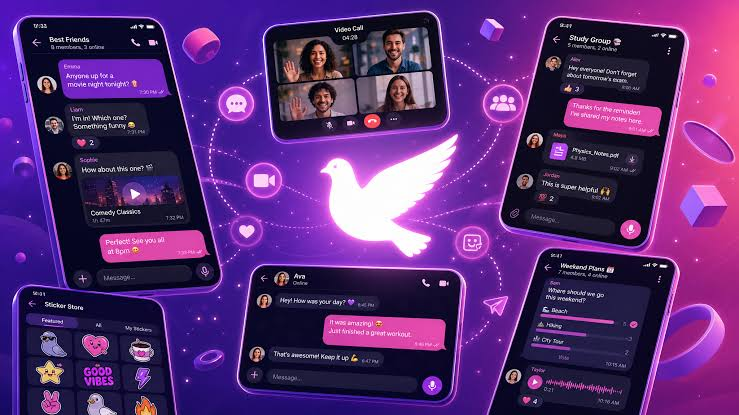
How Group Voice Chat Apps Are Changing Online Socializing in 2026
Online socializing has gone through several transformations over the past decade — from text-based forums to video calls, and now to something more immersive: real-time group voice chat. In 2026, voice-first platforms have become one of the fastest-growing categories in social tech, offering a middle ground between the effort of video calls and the flatness of text messaging. People want connection that feels human, but without the pressure of being on camera. That’s exactly the gap group voice chat apps are filling.
The Rise of Voice-First Communities
For years, social platforms were built around visual content — photos, videos, reels. But a quieter shift has been happening underneath all that noise. People are spending more time in voice rooms, drop-in audio spaces, and live group chats where the conversation itself is the content, not a polished video or a curated feed.
This shift makes sense when you think about attention fatigue. Scrolling through endless video content is passive. Voice chat, on the other hand, is active and social — you’re not just consuming, you’re participating. Whether it’s gamers coordinating strategy, students studying together, or friends just hanging out after work, a group voice chat app gives people a low-effort way to feel present with others in real time.
Why Voice Beats Text for Real Connection
Text messaging is convenient, but it strips away tone, emotion, and spontaneity. Voice restores all of that. A joke lands differently when you hear someone laugh. A tough conversation feels less cold when there’s an actual voice behind it. This emotional bandwidth is a big reason voice chat apps have grown so quickly among younger users who grew up multitasking across multiple apps and don’t want another visually demanding platform.
Group voice chat also solves a practical problem: coordination fatigue. Instead of juggling ten different text threads, people can jump into one live room and talk things out in minutes. It’s efficient, casual, and doesn’t require the same mental preparation that a scheduled video call does.
The Role of Voice Chat Room Hosting
As these platforms have matured, so has the infrastructure behind them. Hosting a stable, low-latency, multi-user voice room isn’t trivial — it involves handling simultaneous audio streams, managing permissions, muting, room moderation, and scaling for hundreds or even thousands of concurrent users without lag.
This is where voice chat room hosting has become a critical piece of the puzzle. The quality of the hosting infrastructure directly affects user experience: dropped audio, delay, or crashes can kill a community’s momentum instantly. Apps that invest in reliable hosting are the ones retaining users, because nothing frustrates a group conversation faster than technical glitches mid-chat.
Good hosting also enables features people now expect as standard — persistent rooms that communities can return to daily, scheduled voice events, breakout rooms for smaller side conversations, and moderation tools that keep spaces safe without killing the spontaneity that makes voice chat appealing in the first place.
Communities Are Being Rebuilt Around Voice
One of the most interesting outcomes of this trend is how it’s reshaping the idea of “community” online. Instead of a group chat with hundreds of unread messages, communities are forming around live voice rooms that people drop into whenever they’re free. It feels more like walking into a shared living room than checking a notification feed.
Gaming communities were early adopters, using voice chat for coordination during matches. But the use case has expanded well beyond gaming. Study groups, hobby communities, creator fan bases, and even professional networking circles are now using group voice spaces to build stronger, more consistent engagement than static text channels ever could.
This is a meaningful shift in how platforms think about retention. A well-designed group voice chat app isn’t just a communication tool — it becomes a recurring destination, a place people check in on the way they might check in on a favorite forum or subreddit, except the interaction is live and personal.
Accessibility and Ease of Use
Another reason voice chat has taken off is accessibility. Not everyone wants to be on camera, and not everyone has the bandwidth or environment for video calls. Voice removes that barrier. You can join a conversation from a walk outside, while cooking, or while multitasking at your desk — something that’s simply not possible with video.
This flexibility has made voice chat especially popular among people who want social interaction without the performative pressure that often comes with video-based platforms. There’s less self-consciousness, fewer distractions from appearance or background, and more focus on the actual conversation.
What This Means for 2026 and Beyond
As we move further into 2026, the demand for real-time, low-friction social experiences is only going to grow. People are tired of platforms that demand constant content creation just to stay connected. Voice chat offers something simpler: show up, talk, and leave whenever you want, with none of the pressure that comes with maintaining an online persona.
The apps that succeed in this space will be the ones that get the fundamentals right — stable infrastructure, intuitive room management, and features that make spontaneous socializing feel effortless. As more platforms compete in this space, users will gravitate toward the ones that combine ease of use with dependable performance, since that combination is ultimately what keeps a voice-first community alive long-term.
Group voice chat isn’t a passing trend — it’s a natural evolution of how people want to connect online: casually, authentically, and without the friction that other formats impose. As the technology behind these platforms keeps improving, expect voice-first socializing to become an even bigger part of everyday online life.